

5 reasons your windscreen smears after summer
The first autumn rain, the wipers kick in, and suddenly there's a grey fan across the glass. Drive into the low October sun and it turns into a wall of streaks. Almost everyone knows this after a long summer, and almost everyone reaches for the glass cleaner first. The catch: windscreen smears rarely have a single cause, and doing things in the wrong order makes them more stubborn, not less.
Windscreen smears after summer come from five different sources: bug protein, dirty wiper blades, wax film from the car wash, dried-on glass cleaner and the film on the inside of the glass. Each one needs its own fix, and the order matters.
1. Dried bug residue smears into streaks with the first rain
Dried bug residue is protein that has denatured on hot glass and swells up again in the rain. The wiper then drags this swollen layer right across your field of view as a cloudy film.
A windscreen can reach up to 80 °C in the summer sun. From around 50 °C, proteins lose their folding and turn hard and insoluble in water, just like egg white in a pan. What's left are small, glass-hard islands where the water film breaks up. When the wiper passes over them, each spot acts like a blob it spreads sideways. That's why the screen looks worse after the first autumn rain than it did in August, even though not a single new bug has landed on it.
The fix is alkaline chemistry, not elbow grease. A bug remover in the pH 9 to 11 range breaks down the protein chains until they rinse off with water. TUGA Chemie Insekten-Teufel® works at pH 9 to 9.5 and comes as a gel that stays put on the sloped windscreen instead of running off into the scuttle panel. Give it two to four minutes on cold glass, then rinse thoroughly. Never longer: once the gel dries, it stops dissolving anything.
One detail that catches a lot of people out: alcohol-based glass cleaner is the wrong first step on fresh bug residue. Solvents pull water out of the protein and tend to make it harder, not softer. Only once the bug remover has broken down the protein and you've rinsed it off does the glass cleaner come in for the last film. If five minutes of foam hasn't shifted anything for you, that's usually exactly why: the foam ran off before it had time to work. You'll find a range of different consistencies under bug removers.
For really old residue, there's a slow pre-soak that fits nicely into a Saturday: soak a cloth in water with a little car shampoo and lay it flat over the affected spots for 30 to 60 minutes. The constant moisture lets the dried-out protein swell, and the bug remover has far less work to do afterwards. Newspaper, as old forum threads recommend, has no place on a car: the printing ink comes loose and soaks into light-coloured paint.
2. Your wiper blade puts the summer grime back on the glass
A wiper blade with bug residue, soot and rubber debris stuck to its lip spreads that layer again with every wipe, even on freshly cleaned glass. The glass is clean, the wiper isn't.
There's also an effect you only spot on a second look: rock-hard dried insect shells in the wiper's path act like tiny blades. Every pass over them cuts fine nicks into the lip, and road grime settles into those nicks. From then on, the wiper leaves the same thin streak in exactly that spot every time it rains.
A new wiper rubber sits at around 50 to 60 Shore A and leaves the factory with a wafer-thin graphite coating. The graphite acts as a dry lubricant: the lip glides, flips over cleanly at the turning point and clears the water as an even film. Bosch rates the service life at 500,000 to 750,000 wipe cycles, which works out at six to twelve months in everyday use. After a summer of bug season, the lip often isn't worn out, just dirty.
Clean the rubber gently. Fold the wiper arms into the service position, lay a cloth underneath so nothing snaps back onto the glass, and draw a soft microfibre cloth with diluted, wax-free car shampoo lengthways along the lip. Keep going until no more black streaks show up on the cloth. For the full step-by-step, see our article Clean your wiper blades instead of replacing them.
This is where care hits its limit: alcohol, methylated spirits or neat glass cleaner get the rubber very clean for a day and wash the graphite out in the process. After that, the wiper judders. And if it still leaves a wide haze after you've thoroughly cleaned both glass and rubber, or chatters all the time, the edge is worn round or has hardened. Then only a new wiper blade will do. In Germany, a smeary wipe pattern in your field of view gets noted as a defect at the TÜV inspection anyway.
Your screenwash plays a part now too. Tip winter concentrate into a tank full of summer screenwash in October and you dilute the antifreeze while weakening the surfactants in the summer cleaner. Better to run the tank mostly empty first and only then add the winter concentrate, at about 1:2 according to the manufacturer for frost down to around -10 °C.

3. Car wash wax leaves a greasy film on the glass
Hot wax, drying aid or a shampoo with added wax ends up on the windscreen with every wash too, leaving an invisible film that the wiper turns into streaks and chatter marks when it rains.
On paint you want this film, on glass it gets in the way. It changes the surface tension unevenly: in some spots water beads, in others it sheets. The wiper no longer has an even water film to glide on, and it skips. Tell-tale signs are a greasy sheen against the light and a wipe pattern that closes up again within seconds. If you went through the car wash a lot over the summer, there's a good chance this film is on your glass.
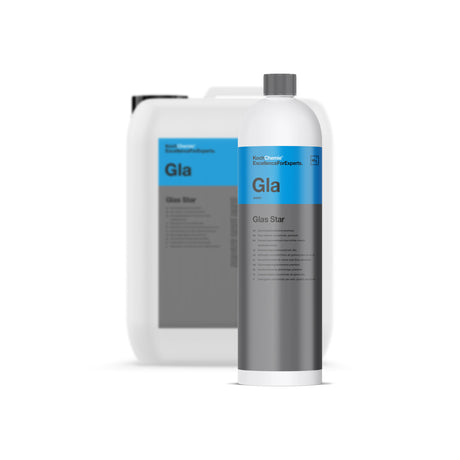
For wax, silicone and grease, you want an alcohol-based glass cleaner. Koch-Chemie Glas Star "Gla" cuts through oil, grease, silicone and wax residue and evaporates without leaving anything behind. It comes as a concentrate: 250 ml in 750 ml of distilled water gives you one litre of spray solution at a ratio of 1:3. One litre of concentrate turns into about four litres, enough for around 130 windscreens. All five verified reviews on Trusted Shops say the same thing: clear glass, and the dirt comes off easily.
If the film has been building up for months and the water film still breaks up after glass cleaner, chemistry alone won't cut it. The glass then needs a mechanical deep clean with a fine glass polish that opens up the pores. A simple test shows whether the glass is truly clean: run water over it. If it sheets off as an unbroken curtain, the screen is clean. If you get beads and dry islands side by side, there's still a film on it. How to remove an old oil film in two steps is covered in Removing oil film from your windscreen.
4. Glass cleaner on warm glass dries into streaks
Glass cleaner that evaporates on a warm screen or in the sun before the cloth picks it up leaves exactly the streaks it's meant to remove. Most streaks after cleaning come down to technique, not the product.
Two things work together here. First, temperature: on warm glass, the cleaner flashes off in seconds and leaves the dissolved dirt behind as a ring. Second, water: mix a concentrate with tap water and you put limescale on the glass. Once it evaporates, it stays behind as a fine white edge you'll see in the sun the next morning. More product makes both worse, because more liquid leaves more residue.
The technique is simple. Cold glass, shade or an overcast sky, Glas Star mixed with distilled water only, about five to eight fine sprays per square metre. Then wipe with a folded microfibre cloth in straight, overlapping passes, not circles, and follow up with a second, dry glass cloth. Put the water in the spray bottle first, then the concentrate, otherwise you get a head of foam that takes minutes to settle.
The cloth matters too. Glass cloths with a short waffle weave trap the loosened film in their pockets instead of just pushing it around the glass like a plush paint towel. The key is to use that cloth on glass only. A cloth that has ever seen dashboard spray or wax carries silicone in its fibres and stamps half-moon smears onto the glass the next time you clean.
Sounds like small stuff, but it makes all the difference. Almost everyone does their first clean in the midday sun because the weather happens to be nice. For a dry Saturday that means: do the glass in the morning or late afternoon while it's still cool, and not straight after a drive, when the glass is still holding engine heat.

5. Low autumn sun shows up the film on the inside
Some of the smears aren't on the outside at all: plasticisers from the interior trim form a film on the inside of the windscreen, and only the low autumn sun shining through the glass makes it visible.
In summer, the dashboard below the windscreen gets very hot. Plasticisers outgas and settle as a thin, greasy film on the cooler glass. Add moisture from your breath, skin oil from fingers and, for smokers, nicotine. In July you hardly notice the film because the sun is high. In October it sits low in front of you, and that exact light shows up every streak. Fittingly, search interest in windscreen smears hits its yearly peak at the end of September.
On the inside, you work differently. Don't spray Glas Star onto the glass, spray it onto the cloth, so no mist ends up on the dashboard, the display or in the vents. For a heavy film, use it neat on the cloth, otherwise in the 1:3 mix. Fold the sun visors down first, because otherwise liquid collects there and later drips onto the glass, and switch the ventilation to recirculation.
The inside is also why so many people clean the outside three times and it still doesn't get better. A quick test helps: run your finger once across the inside. If it leaves a visible trail, your problem is on the inside. If not, it's one of the four causes on the outside.
On many newer cars, the camera for the driver assistance systems and the rain sensor sit at the top of the windscreen. Only use a damp cloth there, don't spray anything into the camera housing and don't use polish. The camera is precisely calibrated at the factory, and a smeary or abraded patch right in front of it can throw off its detection.
Four products and a dry Saturday cover all five
You don't need a whole shelf for the five reasons, just four products in the right order: break down the protein first, then strip grease and wax, deep clean the glass if needed, and protect it last. The wiper blade only needs a mild shampoo and a cloth.
TUGA Chemie Insekten-Teufel® 1000 ml / 1 Liter dissolves bug residue on the windscreen, mirrors and front end. At 50 to 80 ml per front end, one litre covers more than twelve rounds. Where it stops: it breaks down protein, not a wax film, and on carnauba wax on paint it wears down the protection faster.
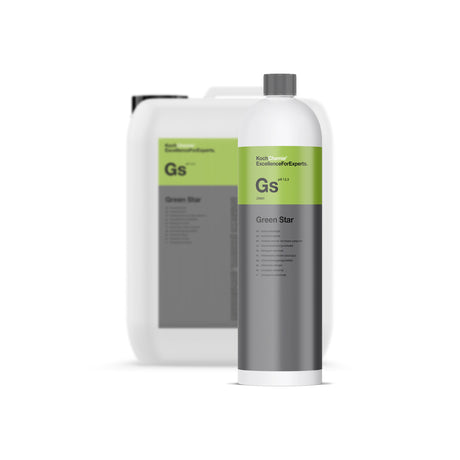
Koch-Chemie Glas Star "Gla" 1000 ml / 1 Liter takes care of wax, silicone, grease and the film on the inside. As a concentrate, it's the economical tool if you look after several windscreens or cars. If you'd rather start ready to spray, go for the version with the spray head, which gets picked on the product page just as often as the bottle on its own. Where it stops: keep it away from the adhesive edges of aftermarket window tint film, as the alcohol can soften the adhesive. You'll find more glass cleaners, including alcohol-free ones, under glass cleaners.
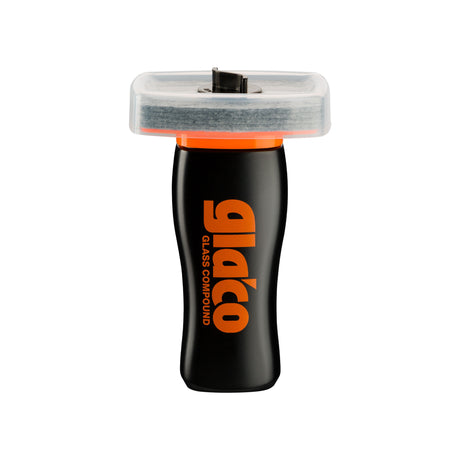
Soft99 Glaco Glass Compound Roll On is for the film that's still there after glass cleaner. It cleans mechanically with fine particles and takes old sealant residue and oil film with it. It's not an everyday cleaner but a deep-clean step, once or twice a year.
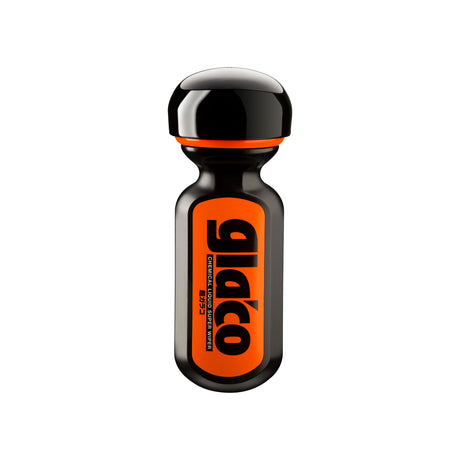
Soft99 Ultra Glaco rounds off the routine. According to the manufacturer, the fluoropolymer layer lasts up to twelve months, rain beads off on its own from about 45 km/h, and bug residue doesn't stick as well. 70 ml covers up to five windscreens. In fairness: on a freshly sealed windscreen the wiper has no water film to ride on in light rain, and some wipers judder for the first few days. That usually settles down, and faster with a clean rubber.
The timing works out: after application, the sealant needs about twelve hours without rain or high humidity to bond with the glass. It stays wet until Friday, and Saturday to Wednesday is forecast to be dry. Start on Saturday morning and you'll have bug remover, wiper care, glass cleaning and sealant done by the afternoon, with the layer curing overnight.

Detailing1-Insight: After every summer we get questions about smears that get worse after the third clean instead of better. Almost always, the order is the wrong way round: glass cleaner on the bug residue first, then surprise that the wiper smears. We flip it. Bug remover on the cold glass for two to four minutes first, rinse, then wipe the wiper lip with shampoo water, and only right at the end Glas Star at 1:3 with distilled water. The wiper rubber never gets any alcohol along the way, otherwise it judders from the next rain onwards.
No time for the whole post? Get it summarized: