

Tyre Dressing vs Rain: Spray, Gel or Coating, What Actually Stays on the Sidewall
Daniel von Detailing1 |


Koch-Chemie
Koch-Chemie Cutting Compound "H7.01" Sanding Polish (Coarse)
Heavy Cut Compound for weathered paint and deep scratches
Koch-Chemie
Heavy Quick Cut "B9.01" Heavy cutting compound (coarse)
Schleifpolitur Grad 9,0 für tiefe Kratzer & starke Lackkorrektur
SONAX
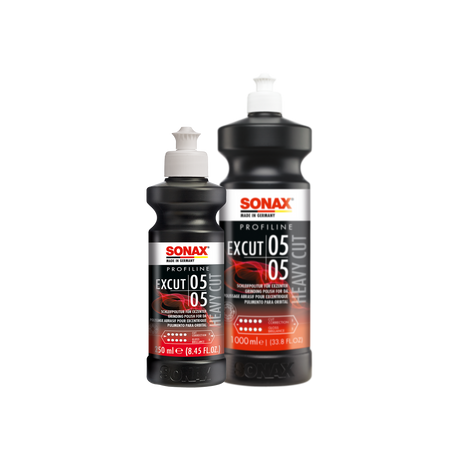
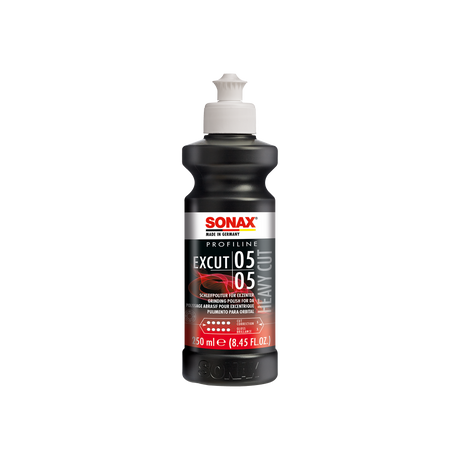
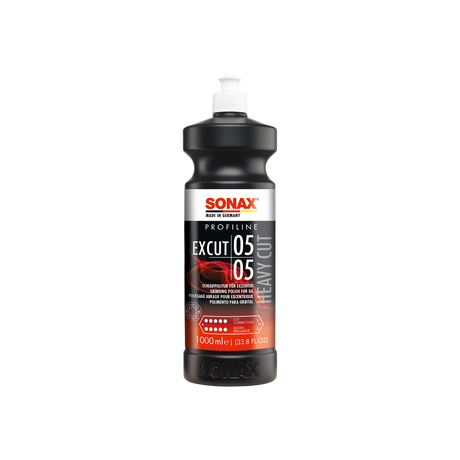
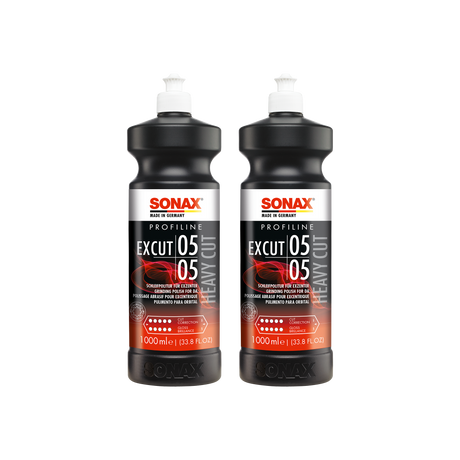
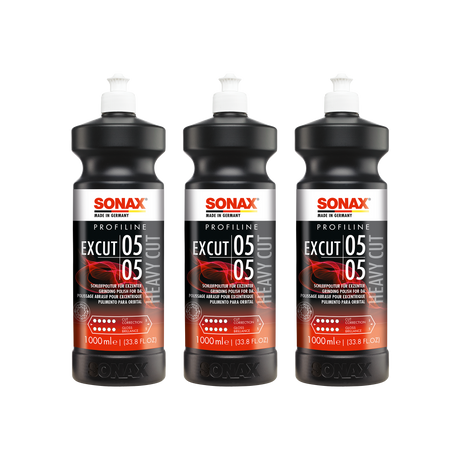
PROFILINE EX "05-05" Cutting Compound (Heavy-Cut)
Dust-reduced eccentric polish for professional paint repair
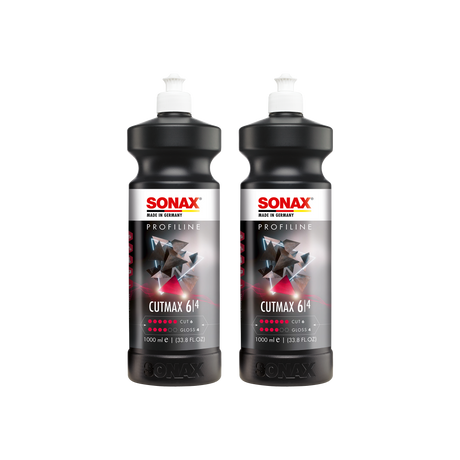
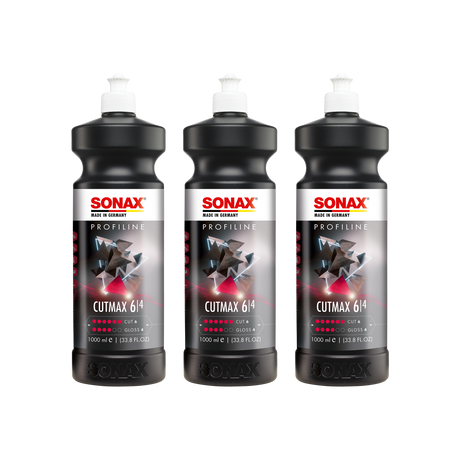
SONAX
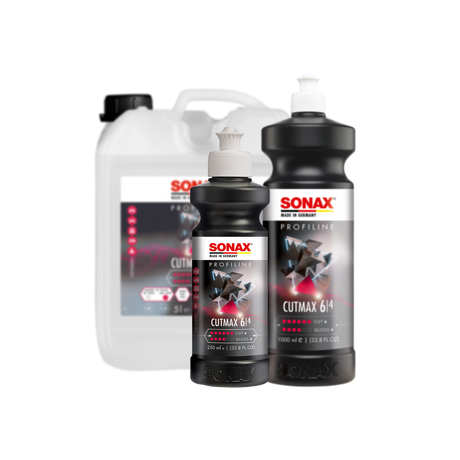
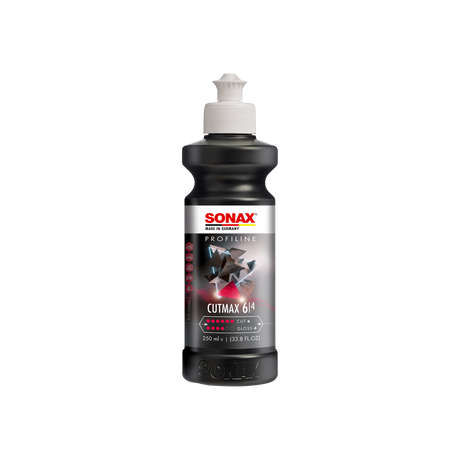
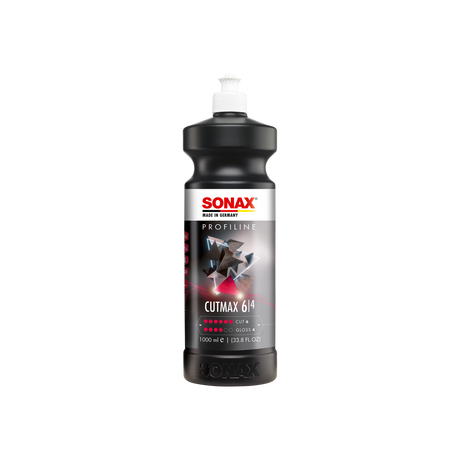
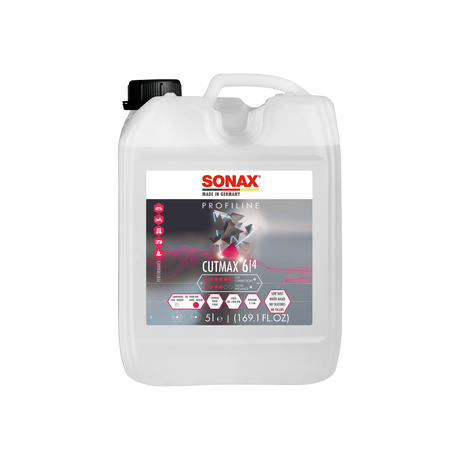
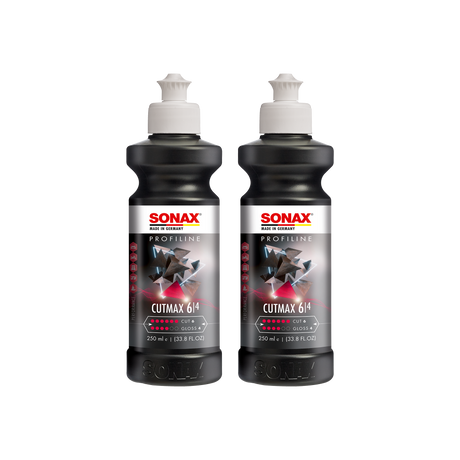
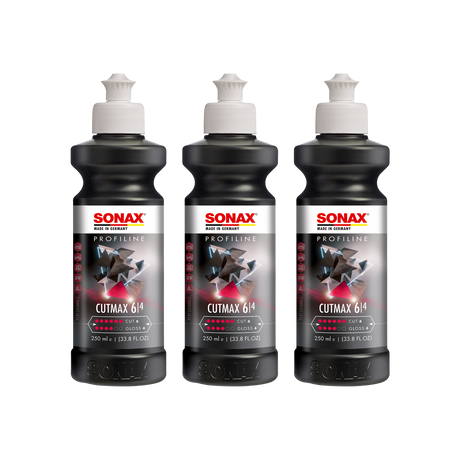
PROFILINE CutMax "6/4" cutting compound (down to P1000)
High-performance cutting polish for maximum scratch removal
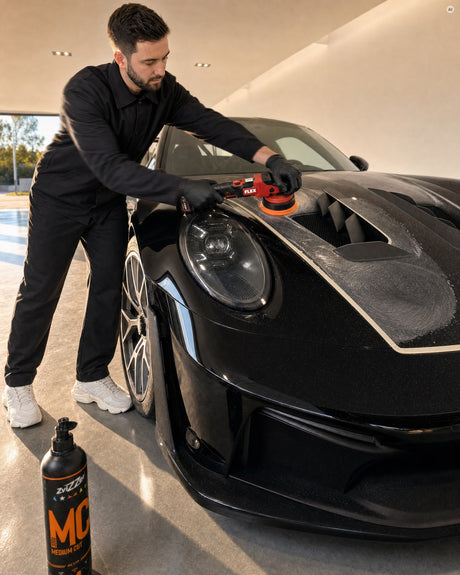
A one-step polish takes the scratch when your fingernail does not catch.
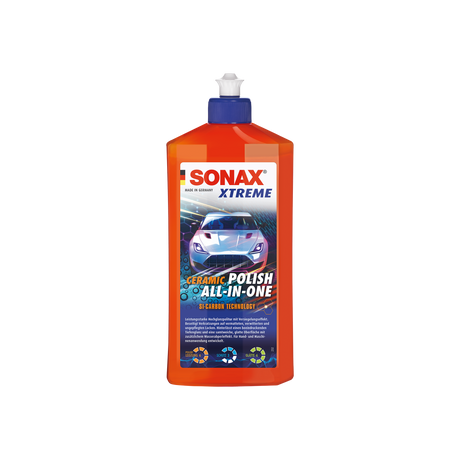
SONAX
XTREME Ceramic Polish "All-in-One" Polish
Ceramic Polish All-in-One — Paint Correction with Ceramic Protection
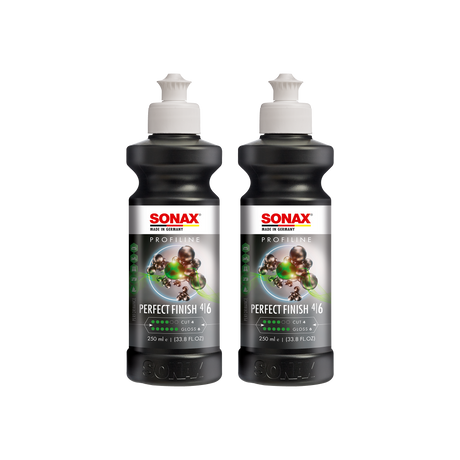
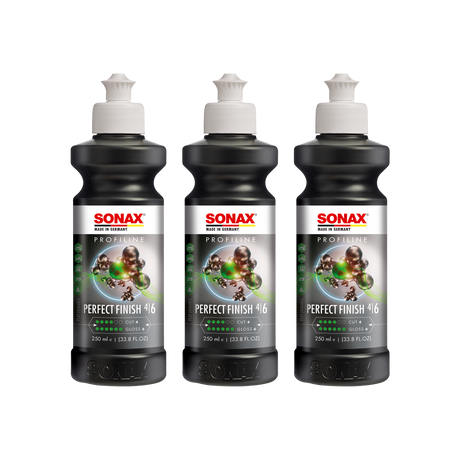
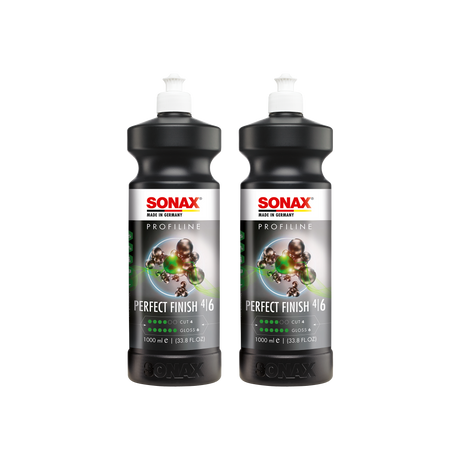
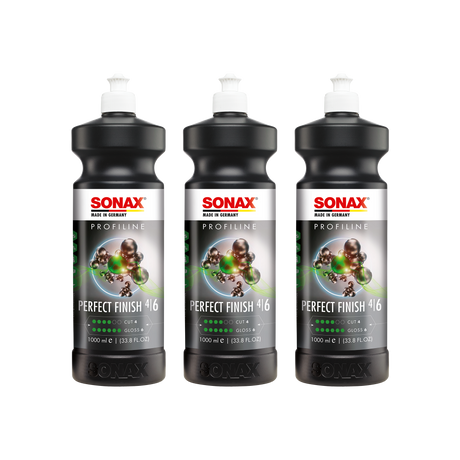
SONAX
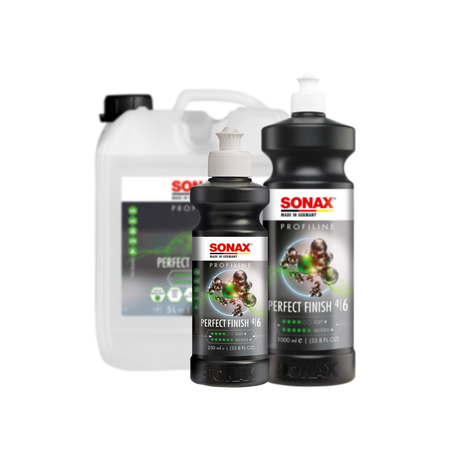
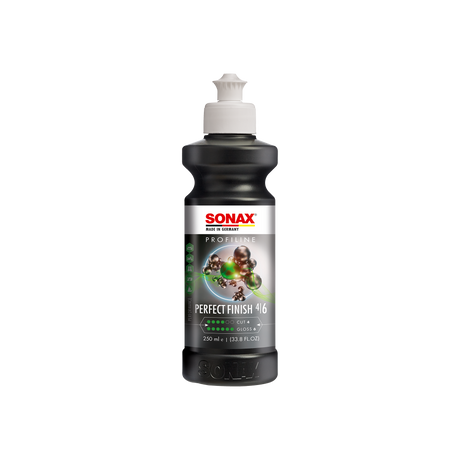
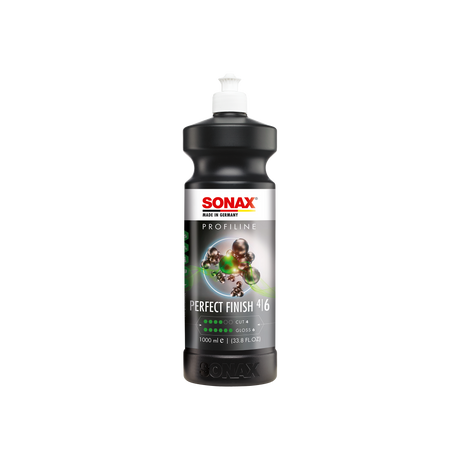
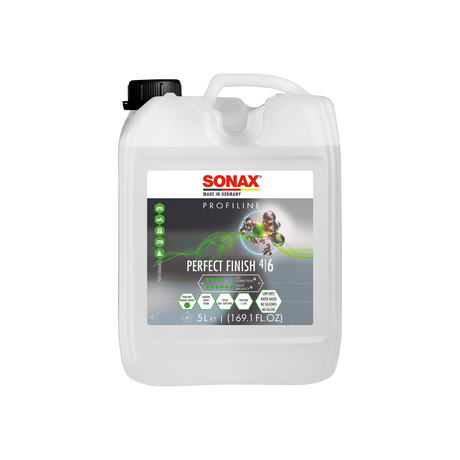
PROFILINE PerfectFinish "4/6" Finish Polish (up to P2000)
PerfectFinish 4/6 — Finish Polish after wet sanding up to P2000


Meguiars
Ultimate Polish Pre-Waxing Glaze
Swirl Removal & Maximum Deep Gloss — the Final Polishing Step


SONAX
PROFILINE Cut+Finish "5/5" One-Step Polish (up to P1500)
Fast polish with maximum gloss for the perfect look


SONAX
PROFILINE NP "03-06" High-Gloss Polish (Finish)
NP "03-06" — High Gloss Finishing Polish for Clear Coat
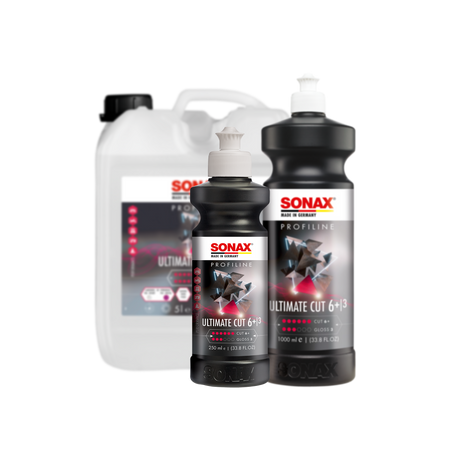
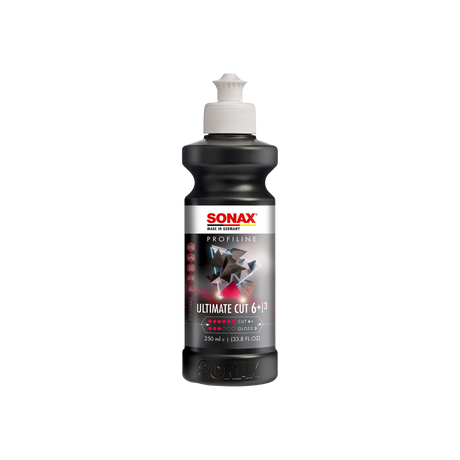
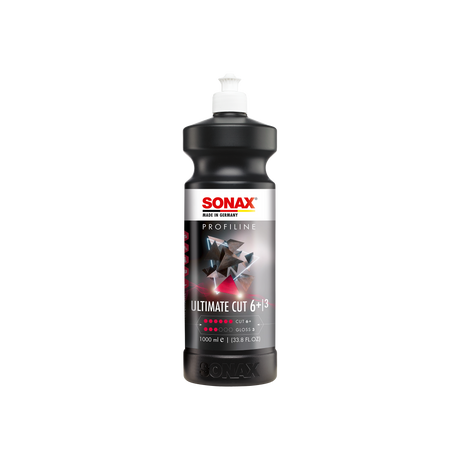
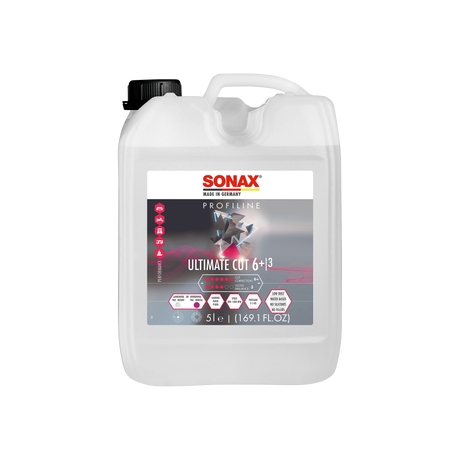
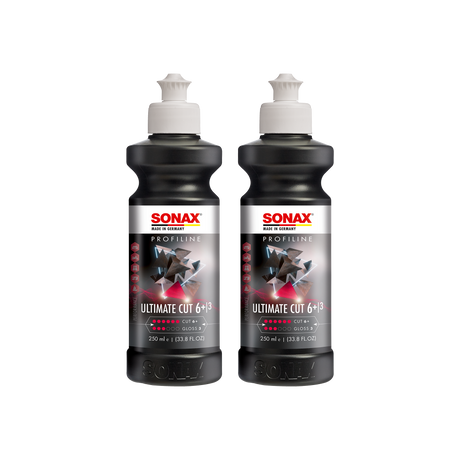
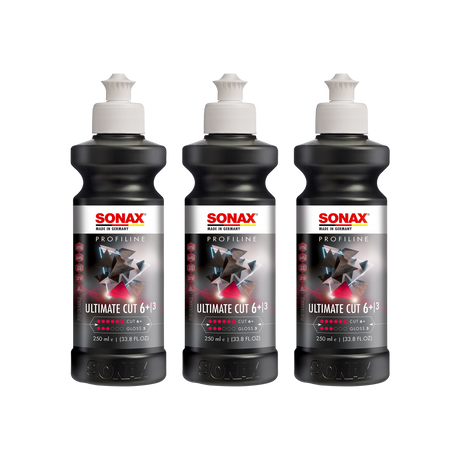
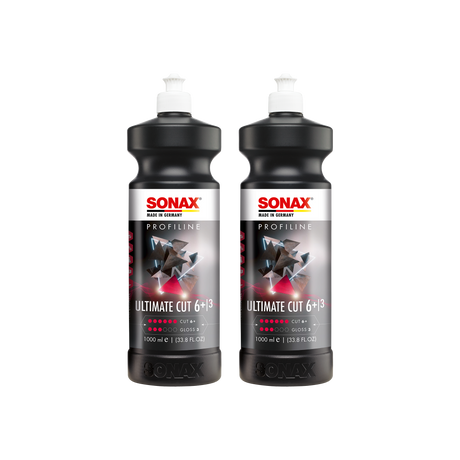
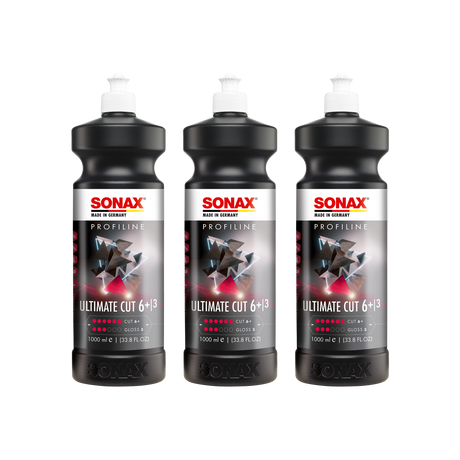
SONAX
PROFILINE UltimateCut "6+/3" Cutting Compound (up to P1000)
UltimateCut 6+/3 — Sanding Polish up to P1000
Koch-Chemie × THE FINISHER
THE FINISHER "PowerSpeedPolish" OneStepPolish
Powerful Polish for Lasting Paint Restoration
What does a polish actually do? It uses an abrasive grit to shave off a wafer-thin layer of clear coat and opens up a flat, glossy surface underneath. At Detailing1 you'll find coarse cutting compounds, finishing polishes for the deep gloss, and all-in-one polishes for a single-step pass.
Car polish is a paste or emulsion of abrasive grit and carrier oil that doesn't fill a scratch — it levels the paint around it down to the bottom of the scratch. The grit sits in the micron range, the oil keeps it in suspension, lubricates and cools. Grit size, grit hardness and the pad decide whether you get heavy cut or a fine gloss. Without a machine, a pad and pressure, nothing happens at all.
Detailing1's tip from the shop: what we see day-to-day is that too much polish on the pad is the single most common reason for a mediocre result. Three or four pea-sized drops on a 130 mm pad are enough for a section of about 40 × 40 cm. Lay a bead right across the pad instead and you get a smeary film where the grit floats instead of cutting, plus residue in every gap. The paint looks glossy afterwards because the oil masks the fine scratches, and come the first rain it’s all back. Less product, more passes, then pull it down once with a panel wipe at the end and check it in raking light.
Machine polishing means removing material. The polish keeps shaving clear coat until the deepest point of the scratch is the new surface.
In cross-section a swirl is a narrow notch. Its walls throw incoming light in every direction, and that’s exactly what you see as a milky haze in sunlight. Drop the surface around it by a few microns and the notch is gone, the light gets reflected straight back again, and the paint reads deep.
The price you pay is material. The clear coat on a factory car sits at around 35 to 50 µm — about half the thickness of a human hair. A coarse cutting compound on a hard pad takes one to three µm off per pass. Translated: two or three full corrections are no drama over the years, after that you want to know your film thickness before you carry on.
Fillers are a separate thing. Plenty of polishes carry oils and waxes that visually close fine scratches without removing them. That’s not a con, it’s a legitimate part of the formula, and it’s why a result looks different after three washes than it did the evening you finished. If you want to know what’s actually gone, pull the panel down with a panel-wipe solution and take another look.
At the top end the polish stops where the chemistry starts. Anything sitting on the paint rather than in it belongs in paint decontamination, not under the pad. Embedded iron particles are harder than any abrasive grit and turn into a cutter under the pad, dragging a fresh line right across the panel.
At the bottom end it stops where protection starts. A polish leaves bare, open paint with zero durability. The gloss straight after you buff it off is real and it’s unprotected, so a sealant or a wax goes on the same day.
Between a heavy cut and a finishing polish there's no marketing difference — there's a grit size.
The abrasive in almost every paint polish is aluminium oxide, known in engineering as corundum, a crystal that’s clearly harder than the clear coat above it. Ground coarse, it cuts deep and leaves its own fine sanding trail. Ground fine — under a micron on finishing polishes — it polishes that trail back out. Here’s the tell: every polish leaves a defect smaller than the one it removed.
Manufacturers map this out in stages, and at Koch-Chemie the system reads especially clearly. The Koch-Chemie Heavy Cut „H9.02" Coarse Cutting Compound sits at the coarse end, the Koch-Chemie Fine Cut „F6.01" Cutting Compound (Fine) in the middle, the Koch-Chemie Micro Cut „M2.02" High-Gloss Anti-Hologram Polish at the fine end. The names are the scale.
Beyond size, the carrier fluid matters. Oils, water and emulsifiers keep the grit in suspension, build the lubricating film and carry heat away. Let that film run dry and the grit works over the paint bone-dry, the temperature climbs and you end up with holograms instead of gloss. That’s why a polish film starting to flash off is always a stop signal.
The third lever isn't in the bottle at all. A hard foam pad or a wool pad multiplies the cut of a mid-range polish, a soft finishing pad pulls it back. Which combo suits what is over on the polishing pads and cutting sponges, and the rule of thumb is: test the softest combination that still clears the defect first.
At the coarsest end the polish picks up where wet sanding leaves off. The SONAX PROFILINE Cut+Finish „5/5" One-Step Polish (up to P1500) carries its limit in the name: it pulls out sanding marks down to P1500 grit, anything coarser stays visible. A spec like that is the most honest data point a polish can bring to the table.
A polish is a different thing at the end of a pass than it was at the start. Part of these formulas are built exactly around that.
With diminishing grit, the crystals break down under pressure and friction into ever smaller fragments. Abrasion drops off over working time, the cut sits in the first passes, the finish in the last. In practice: a single polish cuts first and then polishes its own trail back out, if you give it the time to.
The opposite model works with constant micro-grit that doesn't break down. Removal stays the same across the whole pass and is steered only through time, pressure and speed. In the scene these run under the tags DAT and SMAT. The advantage is control: you decide when it’s done, instead of waiting for the grit to polish itself out.
You feel the difference on the pad straight away. With diminishing grit the film goes visibly clearer after two or three passes, the machine runs noticeably easier and gets quieter. With constant grit the resistance stays the same right to the end, and the film stays milky until you wipe it off.
From that comes the most important working rule in this category: pulling a diminishing polish off after two passes is the sure road to holograms. The coarse grit has done its work, the fine grit hasn't yet. Run the pass to the end instead and you get the correction and the finish out of the same bottle.
Both systems have the same enemy: heat. Above about 40 °C surface temperature the carrier fluid evaporates faster than it can lubricate. Work in the shade, on paint that’s cold to the touch, and take a break between panels instead of dragging the surface through in full sun.
Three builds cover the whole category, and they solve different jobs.
Cutting compounds are built for visible defects: deeper swirls, car-wash scratches, weathering, sanding marks after a paint repair. The Koch-Chemie Heavy Cut „H9.02" Coarse Cutting Compound and the Koch-Chemie Heavy Cut „H8.02" Coarse Cutting Compound stand for this end. They call for a second step, because they leave a trail of their own.
Finishing polishes take over that second step. The Koch-Chemie Micro Cut „M2.02" High-Gloss Anti-Hologram Polish and the Koch-Chemie Lack-Polish green „P1.03" Finishing Polish barely remove any material and true up the surface optically. On dark solid colours this step is the difference between tidy and stunning, because black shows every bit of unrest.
All-in-one polishes bundle correction and protection together. The Koch-Chemie One Cut & Finish „P6.02" High-Gloss Polish with Sealant brings a sealant component with it, the Koch-Chemie Micro Cut & Finish „P3.01" Micro Cutting Compound with Carnauba Wax leans on carnauba wax. For a car in good shape this is the most honest route to a clean Sunday: one pass, one result, a base layer of protection.
In between sit abrasive gloss polishes like the Koch-Chemie Lack-Polish violet „P2.03" Abrasive Gloss Polish. They cut more than a pure finishing polish and less than a cutting compound, and they're the realistic pick when you're working by hand without a machine.
At the edge of the category are the special cases. Glass polishes work with cerium oxide instead of corundum, metal polishes with very fine pastes for aluminium and chrome, and the marine line targets gelcoat. The Koch-Chemie Gelcoat One Cut „Gp6.01" High-Gloss Polish with Sealant for Gelcoats and Boat Paints (Marine Line) reckons with a layer many times thicker than automotive clear coat that chalks up over the years. Car polish on gelcoat is usually too weak, then, not too strong.
Technique decides more of the result than the choice of bottle does. Three points carry most of it.
First, the amount. Three or four pea-sized drops on a 130 mm pad are enough for one section, two do for every section after that. Too much product builds an oil film where the grains slide past each other instead of biting into the paint, and the rest ends up in panel gaps and trim.
Second, the spread. Set the pad with the polish onto the surface before you start the machine, and spread it across the whole section on the lowest speed. Nothing flings off, the film sits even, and the grit is there everywhere when you take it up to working speed.
Third, the passes. Split the panel into sections of about 40 × 40 cm and work them crosswise, first lengthways then across, with about half the pad width of overlap. Guide speed is around three to five centimetres per second — slower than most people reckon on the first go. Four to six passes are normal, the last of them with no added pressure.
The pad needs attention of its own. After two sections it's saturated with polish residue and spent clear coat and hardly transfers any fresh grit. Brush it out quick or blow it clean, and check its state after every panel. Which machine suits, and how random-orbital and rotary differ, is over on the polishing machines.
And the check belongs in the process, not at the end. After each section, wipe the surface down, take the oils off with a panel-wipe solution and light it at a low angle with a lamp. What you don't see under raking light you'll see two days later in the sun — and by then the car’s already sealed.
Three questions get you to the decision: how deep the defects sit, how hard the paint is, and how much time you've set aside.
You sort out depth with a fingernail. If it catches in a scratch, polish alone won't cut it anymore — now you're into paint repair, not correction. Anything you only see and can't feel is polish territory.
For a well-kept car with light swirls and little time, a single-step pass is the right answer. The Koch-Chemie One Cut & Finish „P6.02" High-Gloss Polish with Sealant is one of our best-sellers in this category for good reason: it visibly tidies up and leaves the paint protected.
For medium defects on hard European clear coats the two-step pays off. First the Koch-Chemie Fine Cut „F6.01" Cutting Compound (Fine) on a medium-hard pad, then the Koch-Chemie Micro Cut „M2.02" High-Gloss Anti-Hologram Polish on a soft pad. Reckon on a full day for a mid-size saloon, a lot less the second time round.
Soft paints, the kind a lot of Japanese cars wear, need less cut than the defects suggest. There, a finishing polish on its own often gets the result, and a coarse cutting compound makes more work than it solves. The other way round, on very hard paints the heavy-cut stage stays the only one that bites at all.
If you're after the bigger picture: the full workflow from prep to finish is under Polishing, the matching hardware under polishing machines and polishing pads and cutting sponges. The polish is the one thing in that chain that actually changes the paint. Everything else on it is a tool.
Too much choice in Polishes? Get help picking:
Daniel von Detailing1 |

Daniel von Detailing1 |

Daniel von Detailing1 |

Daniel von Detailing1 |

Daniel von Detailing1 |

Daniel von Detailing1 |

Daniel von Detailing1 |

Daniel von Detailing1 |

Daniel von Detailing1 |

Daniel von Detailing1 |

Jasper von Detailing1 |

Daniel von Detailing1 |